
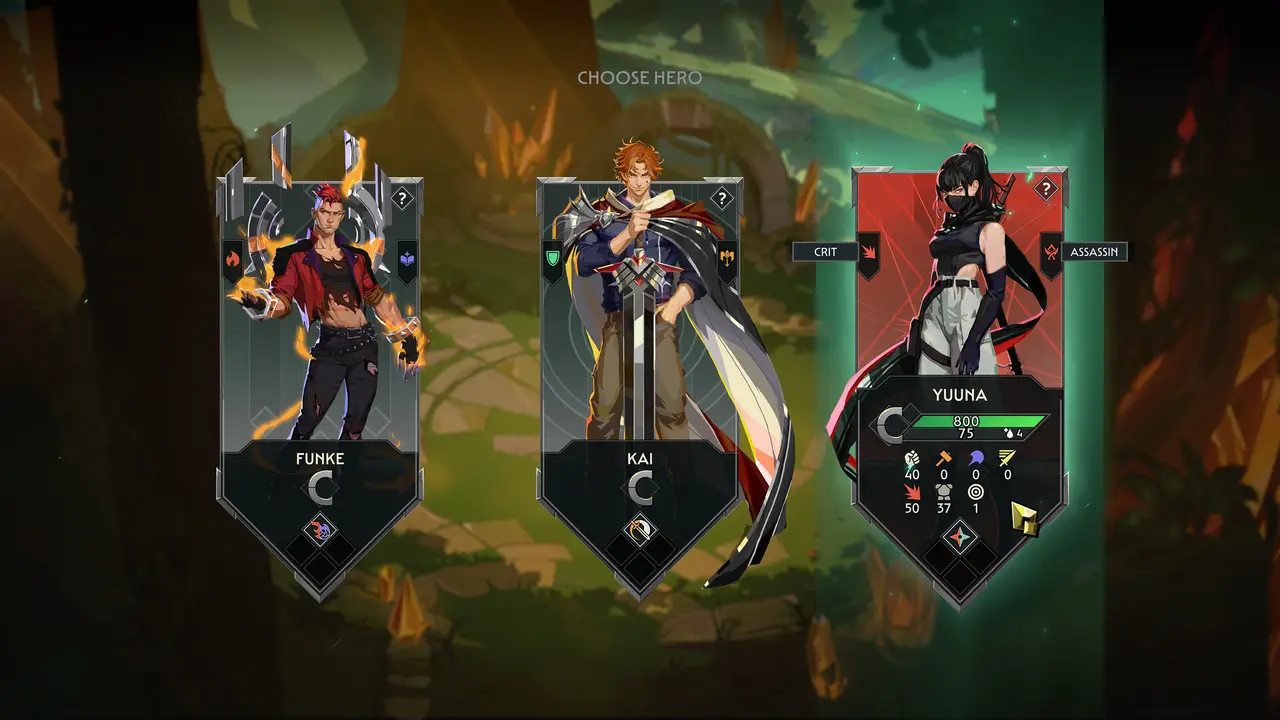
Guildrun heroes overview
Steam says the Guildrun demo includes 25 heroes and 75 spec paths. This page stays at a verified P0 level and does not publish unconfirmed individual hero names.
Guildrun is built around flexible hero roles. Steam says each hero starts with a class and ability, but the player chooses where that hero ends through paths and specialization choices.
That means a good Guildrun draft starts by asking whether the board already has frontline, damage, support, and scaling potential. Only then should you decide whether a specific line wants to become more aggressive, more stable, or more greedy.
Use the hero roster in Guildrun as a pool of jobs rather than a list of fixed, permanent roles. The public marketing message is that Guildrun wants you to pivot mid-run when stronger lines appear.
- Frontline tanks and bruisers hold space on the hex board.
- Backline damage dealers and casters convert relic and item spikes into clears.
- Supports can pivot into other roles through specialization choices mid-run.
- The demo advertises 25 heroes, but this site does not list individual names unless officially confirmed.
Sponsored
What to look for when drafting
Guildrun hero drafting priorities
| Question | Why it matters in Guildrun |
|---|---|
| Who is holding the frontline? | A Guildrun board collapses quickly if the team does not buy time for damage and support to matter. |
| Where is reliable damage coming from? | You need at least one clean Guildrun damage path before chasing greedier synergy. |
| Can this team pivot later? | Steam emphasizes mid-run adaptation, so avoid drafts that lock you into weak lines too early. |
| Does the board already have support? | Healing, buffs, and utility can become stronger in Guildrun once relics and items reinforce them. |
Recommended tools
Related pages
Guildrun pages on this site summarize public Steam, playguildrun.com, and Gematsu information. Verify any exact in-game values in the live demo.