
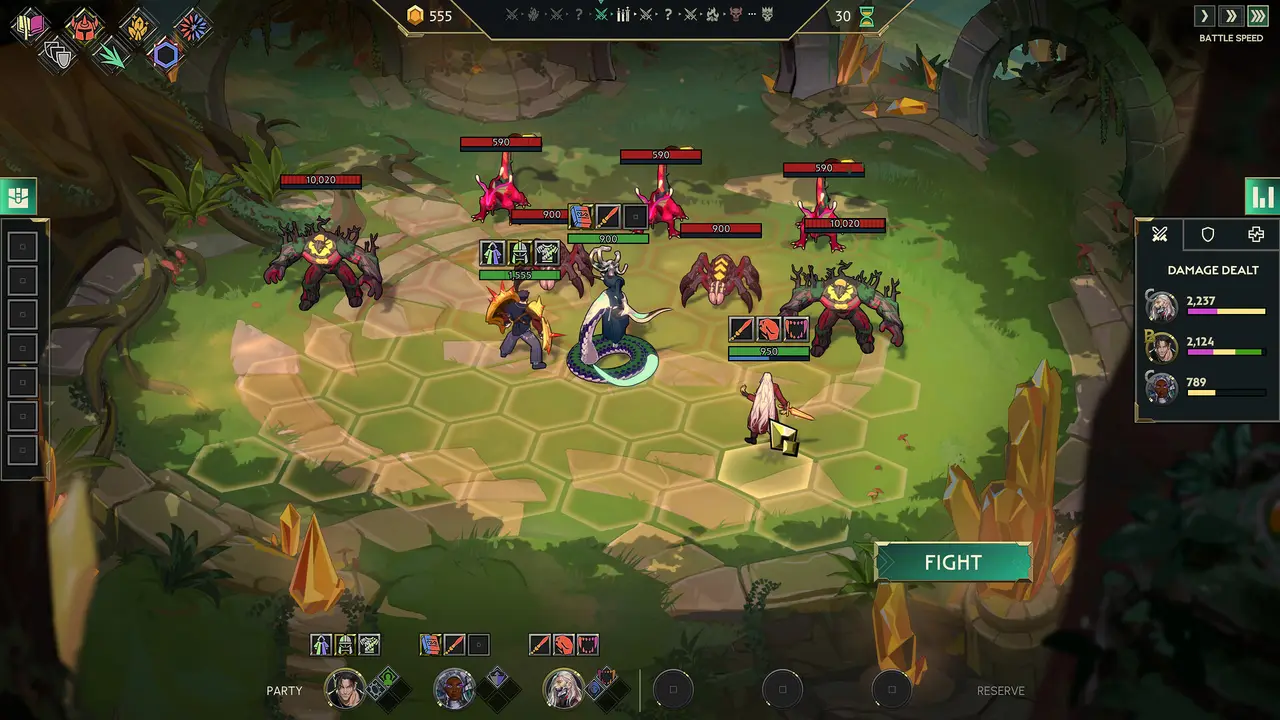
Guildrun how to play
This Guildrun how-to-play guide explains the board, between-fights decisions, and what the player actually controls in the Steam demo.
Guildrun is a PvE roguelike autobattler from Leyline. Steam and the official site describe Guildrun as a game where you build a guild of heroes, then adapt each run through upgrades, items, relics, and specialization pivots.
The official site says a typical Guildrun run lasts about 20 minutes, has no timer, and can be saved mid-run. That makes Guildrun a strong second-screen game: you can pause, think, and use this wiki between fights.
Once combat starts, Guildrun resolves automatically. Your real work happens before the fight: drafting heroes, reading shop offers, choosing specialization paths, and positioning the board.
Sponsored
Run flow in Guildrun
Use this Guildrun loop as your default mental model:
- 1. Draft and position — Set up the Guildrun board with enough frontline, damage, and support to survive the next fight.
- 2. Fight automatically — The Guildrun autobattler resolves the encounter from the setup you already committed to.
- 3. Shop and upgrade — Between fights, spend, reroll, and choose specialization paths that make the current Guildrun board stronger or more flexible.
- 4. Read relic and item offers — This is where many Guildrun runs change direction. Strong relics can justify a pivot if the board can support it.
- 5. Repeat and adapt — Each Guildrun run should feel like a puzzle. Keep what works, patch what breaks, and pivot when the run gives you a better line.
What you control
Guildrun player decisions
| System | What it does in Guildrun |
|---|---|
| Party / Reserve | Decide which heroes are active and which stay in reserve for the next fight. |
| Specializations | Shape how a Guildrun hero grows and whether they pivot into a new role. |
| Relics | Give the run a broader theme and often decide whether to stay balanced or commit harder. |
| Items | Support the current board with tempo, carry power, or frontline stability. |
| Difficulty ladder | Steam says Guildrun includes 8 difficulties plus Endless, so scaling and consistency matter over time. |
Where to go next
Once the Guildrun loop feels familiar, move into how to build so your relic, item, and specialization choices start pointing at the same plan.
Recommended tools
Related guides
Guildrun Beginner Guide
Use a stable first team shape, stop common early losses, and learn what matters most in the demo.
Guildrun How to Build
Build around role coverage first, then follow relic, item, and specialization direction.
Guildrun Demo Walkthrough
Follow a simple path through the current Steam demo without overcommitting too early.
Verify exact in-game values in the live Guildrun demo after updates. Public sources may lag behind balance changes.